OxyVita
The science
behind OxyVita
More than 20 years of scientific studies.
Universities, public institutes, a hospital and international scientific journals. Here is what researchers have measured.
OxyVita
More than 20 years of scientific studies.
Universities, public institutes, a hospital and international scientific journals. Here is what researchers have measured.
A slightly alkaline water, with no additives
[N14]
only after 5 days with the bottle open
[N14]
At OxyVita, we believe you deserve more than promises: you deserve facts. That is why we make available to you the studies carried out since 2004 on the oxygen-rich water from which OxyVita derives. For each one, you will find the institution that conducted it, the protocol followed, the quantified results and, whenever possible, the original document to consult.
How should you read these studies? Each summary specifies the type of research (laboratory, animal or clinical in humans), the sample size, the duration and the measured results. These pointers help you distinguish a laboratory observation from a result confirmed in humans.
The work presented concerns the oxygen-rich water from which OxyVita derives: it does not constitute a health claim and is not a substitute for the advice of a healthcare professional. We regularly expand the OxyVita scientific library as new publications appear.
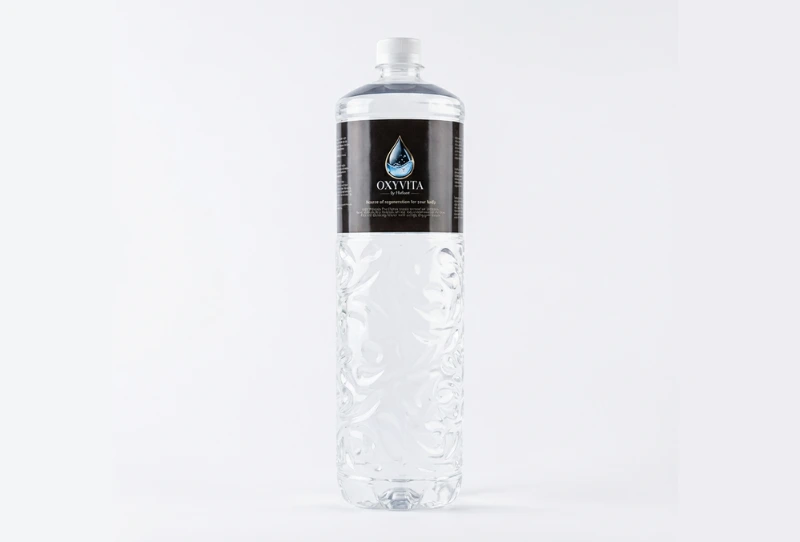

A selection of OxyVita studies organised by research area. Click on each area to access the detailed summaries.

PLOS ONE
Khoo J. et al. (2021) — PLOS ONE, 16(7): e0254619.
In a randomised, double-blind trial, 150 adults with type 2 diabetes drank 1.5 litres of oxygen-rich water a day for 12 weeks. HbA1c fell by 0.3 points on average (p = 0.002), with no change in the placebo group. In the laboratory, oxygen-enriched water appeared to protect mitochondrial mass in the event of excess glucose.
OxyVita
Explore all the studies and discover how OxyVita can fit into your daily life.