
OxyVita
What does
“ageing well”
really mean at cellular level?
OxyVita. A naturally oxygen-rich water to support cellular longevity: the energy, repair and protection of your cells, day after day.
OxyVita
OxyVita. A naturally oxygen-rich water to support cellular longevity: the energy, repair and protection of your cells, day after day.
A slightly alkaline water, with no additives
[N14]
only after 5 days with the bottle open
[N14]
The essentials in 20 seconds
Ageing well is not only visible in the mirror. Cellular longevity happens at the heart of your cells, in their ability to produce energy, repair themselves and defend themselves. And in each of these functions, oxygen plays the leading role.
Cellular longevity happens at the heart of your cells
Every day, billions of cells are replaced, damaged proteins are recycled, and DNA is checked and repaired. This maintenance work has a cost: energy, in large quantities, in the form of ATP, produced in the mitochondria thanks to oxygen and nutrients. Over the years, this system becomes less efficient, and cellular longevity depends directly on it. People who age well are those whose “power plants” run efficiently.
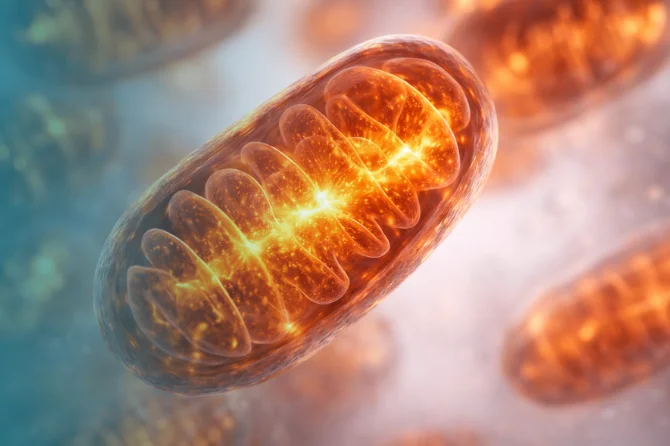
Mitochondria produce ATP, the fuel of your cells, thanks to oxygen and nutrients.
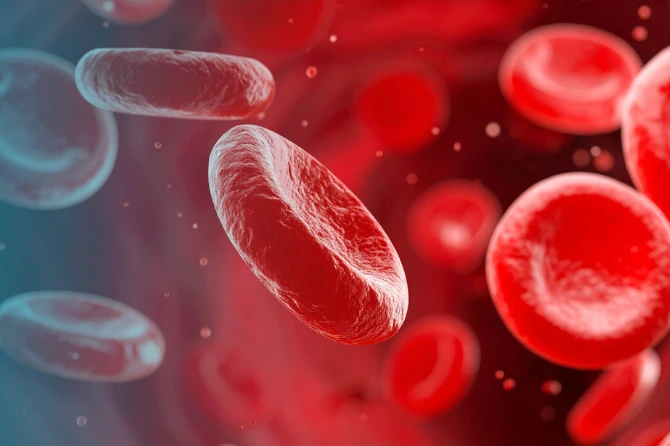
Cells constantly renew themselves and repair their damaged structures.

DNA is monitored and repaired, to limit the build-up of errors.

Your cells defend themselves against oxidative stress thanks to their antioxidant systems.
Your cells have an oxygen sensor. When they lack oxygen, they activate a protein called HIF which changes the activity of hundreds of genes: red blood cell production, formation of new blood vessels, metabolic adaptation. The discovery of this mechanism was awarded the 2019 Nobel Prize in Medicine [N1].
Oxygen is also the source of reactive molecules that the body uses as signals, but which it must keep under control thanks to its antioxidant defences. It is this balance, between energy production and protection, that researchers study when they talk about cellular longevity.

More efficient mitochondria.
Preserved antioxidant defences.
A more effective response to changes in oxygen.
Better-maintained cellular functions, for better cellular longevity.
What the studies measured
PLOS ONE (2021)
An oxygen-enriched water preserved the mitochondrial mass of cells exposed to excess sugar.
[N2]
Budapest (2011)
After 21 days, increased antioxidant capacity in several samples from volunteers.
[N13]
AARMS (2017)
Significant drop in systolic blood pressure in volunteers aged 50 to 75.
[N3]
In your daily life
Spread throughout the day, starting with a large glass when you wake up.
Followed by a one-week break, to repeat throughout the year.
Never heated: boiling causes the loss of about half of the measured activity [N8].
After each serving, to preserve the water’s full potential.
Your questions
Ageing, mitochondria, hydration, biological age: here are the answers to the questions we are asked most often, to help you understand how to age well at cellular level.
Cellular longevity refers to the ability of your cells to remain functional for as long as possible: producing energy, repairing, renewing and defending themselves against damage.
It is not the same as the age on your ID card. Two people of the same age can have very different profiles, depending on their genetics, lifestyle and environment.
Researchers speak of biological age to describe this real state of the body, as opposed to chronological age.
Genes matter, but less than is often thought. Studies of twins estimate that heredity explains only a limited part of lifespan, generally estimated at less than 30%.
The rest depends largely on lifestyle and environment: diet, physical activity, sleep, smoking, pollution, quality of social ties.
In other words, you have real room for manoeuvre. Every healthy habit supports your mitochondria and your cellular longevity, at any age.
Several mechanisms combine. In 2013, researchers proposed in the journal Cell a list of “hallmarks of ageing”, updated in 2023 (López-Otín et al.): genomic instability, telomere shortening, epigenetic changes, loss of protein balance, mitochondrial dysfunction, cellular senescence and chronic inflammation.
None of these mechanisms acts alone: they reinforce one another. A less efficient mitochondrion produces less energy and more reactive molecules, which weakens DNA and proteins, and so on.
Acting on energy production and cell protection therefore means acting on several of these mechanisms at once.
Mitochondria are the power plants of your cells. They use the oxygen you breathe and the nutrients from your food to make ATP, the molecule that powers almost every cellular function.
The most active cells, such as those of the muscles, heart or brain, contain hundreds or even thousands of them.
With age, the number and efficiency of mitochondria tend to decline. This is one of the reasons why fatigue sets in faster and recovery takes longer.
The good news: mitochondria adapt. Regular physical activity, especially endurance exercise, stimulates the formation of new mitochondria, a phenomenon called mitochondrial biogenesis.
No. When producing energy, mitochondria also generate reactive oxygen species. In small doses, these molecules act as signals: they help the cell adapt, for example after exercise.
The problem arises when their production exceeds the body’s defence capacity. This is called oxidative stress: membranes, proteins and DNA suffer damage that builds up over time.
The aim is therefore not to eliminate all oxidation, but to maintain a balance between energy production and protection. It is this balance that determines cellular longevity.
Several approaches exist: telomere length, “epigenetic clocks” based on DNA methylation, or scores combining blood markers and physical abilities.
These tools are mainly used in research. Their results vary from one test to another and are no substitute for a medical check-up.
In everyday life, a few simple indicators already give a good idea of your condition: sleep quality, energy level, breathlessness during exertion, muscle strength, blood pressure.
These habits work together. None is enough on its own, and no product can replace their combined effect.
No. Your cells continue to renew and adapt throughout life. Studies in older people show that endurance or strength training improves mitochondrial function and muscle mass, even after the age of 70.
The benefits of a healthier lifestyle can often be felt within a few weeks: breathing, sleep, energy, mood. The sooner you start, the better, but you are never too old to support your cellular longevity.
The key is to progress gradually, with realistic goals: a daily walk, a more plant-based meal, a more regular bedtime, a few extra glasses of water spread throughout the day. If you have health problems, talk to your doctor before taking up intense physical activity.
The European Food Safety Authority (EFSA) sets adequate total water intakes at about 2 litres a day for women and 2.5 litres for men, 20 to 30% of which comes from food.
With age, the sensation of thirst decreases, which increases the risk of dehydration. It is therefore useful to drink at regular times, without waiting until you are thirsty.
That is why we recommend spreading 1 to 1.5 litres of OxyVita throughout the day, in addition to other drinks and the water contained in food.
OxyVita contains 18 to 20 mg/L of dissolved oxygen, about twice as much as ordinary water [N8] [N10].
The studies on this water were carried out on cells and on small groups of volunteers: preservation of mitochondrial mass in the laboratory [N2], increased antioxidant capacity [N13], lower systolic blood pressure in people aged 50 to 75 [N3].
These results are encouraging, but they need to be confirmed by larger studies. OxyVita is part of an overall healthy lifestyle: it supports your efforts, it does not replace them.
OxyVita is an additive-free, slightly alkaline water (pH 7.5) [N14]. No cytotoxic effect has been observed on human cells in the laboratory [N5].
It is intended for adults who want to take care of their cellular longevity, from active seniors to athletes.
If you have a chronic illness, are undergoing treatment, are pregnant, or if a doctor has prescribed fluid restriction, ask your healthcare professional before changing your habits.
Cell renewal follows very different rhythms depending on the tissue: a few days for the intestinal lining, a few weeks for the skin, about four months for red blood cells.
That is why we recommend 21-day programmes, followed by a one-week break. This rhythm gives you time to observe your energy level, your sleep and your recovery.
Experiences vary from person to person. Simply note how you feel at the start and end of the programme: it is the best way to judge for yourself.
Start your 21-day OxyVita programme to support your cellular longevity, then compare how you feel. An exceptional water for a livelier, more active and calmer life.